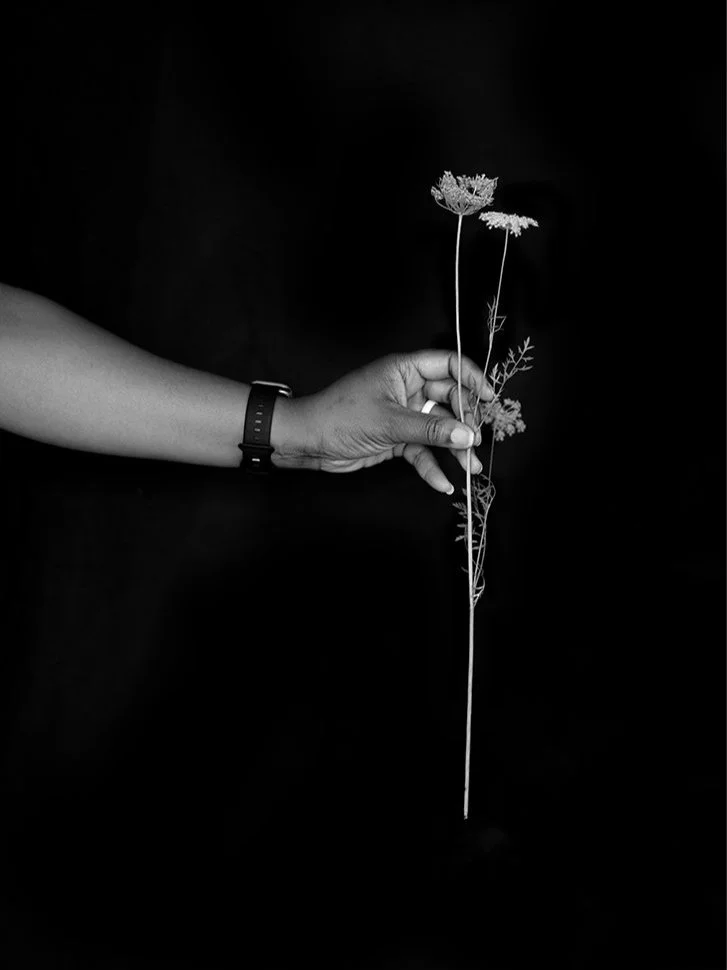
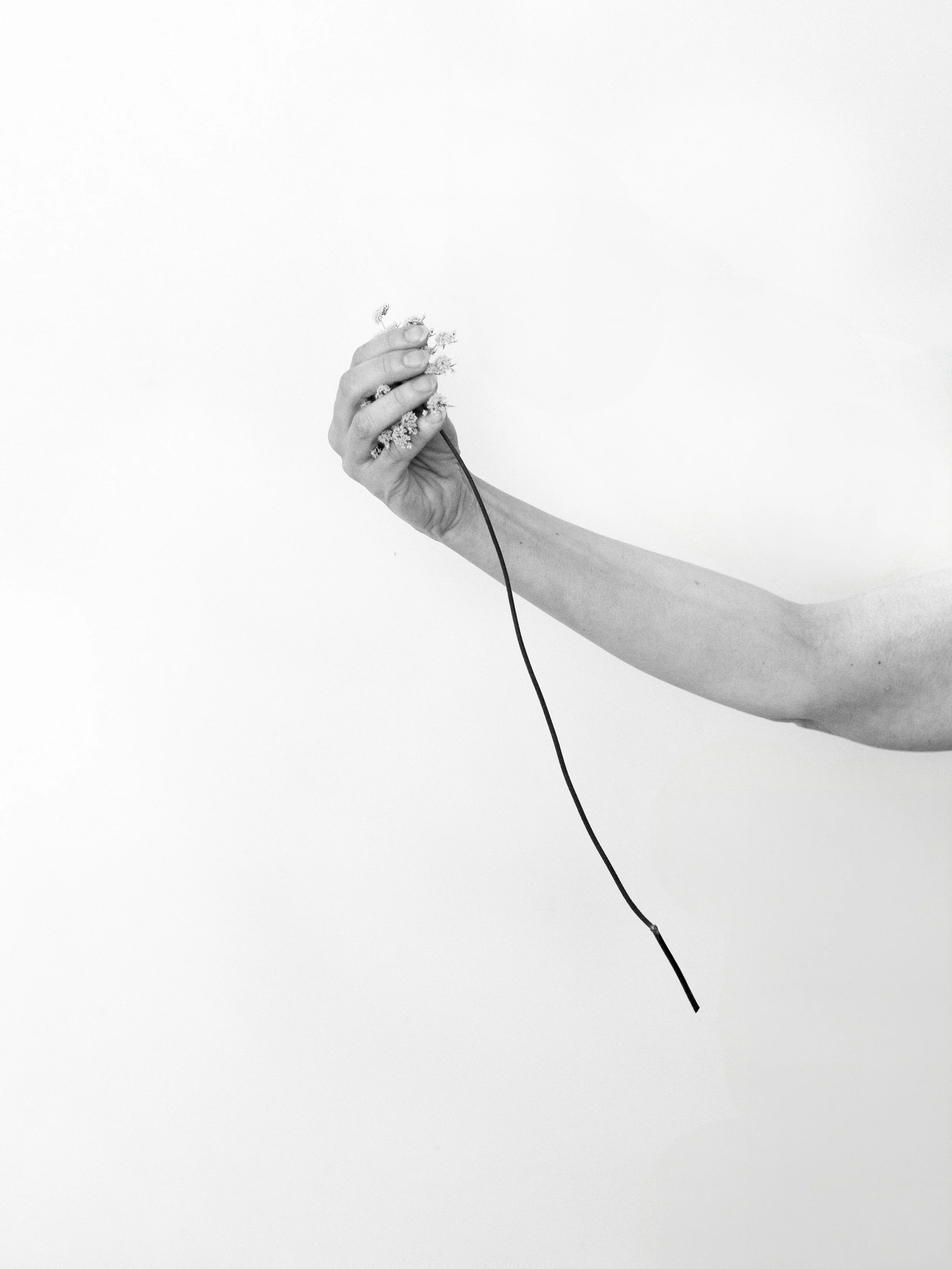
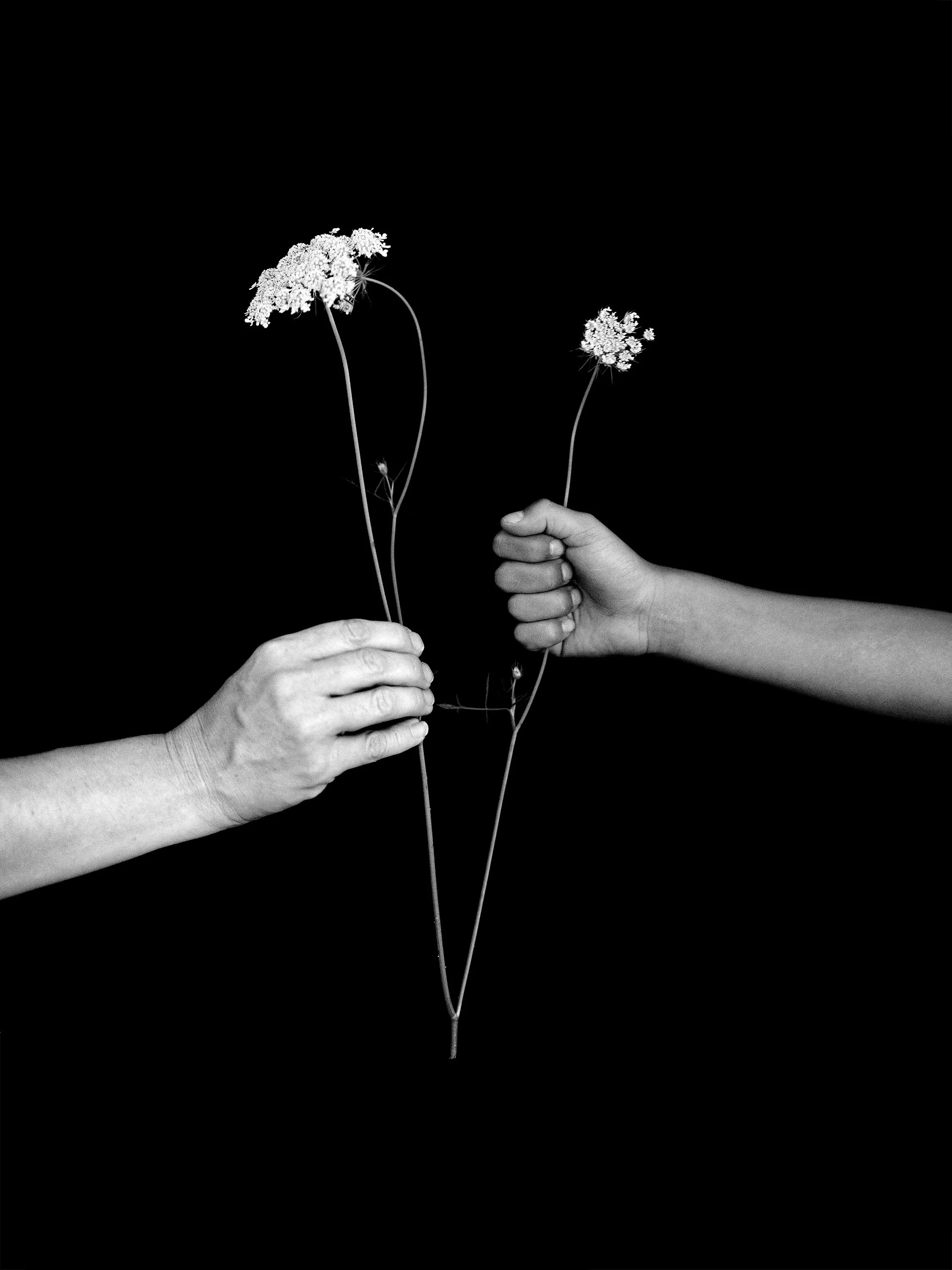
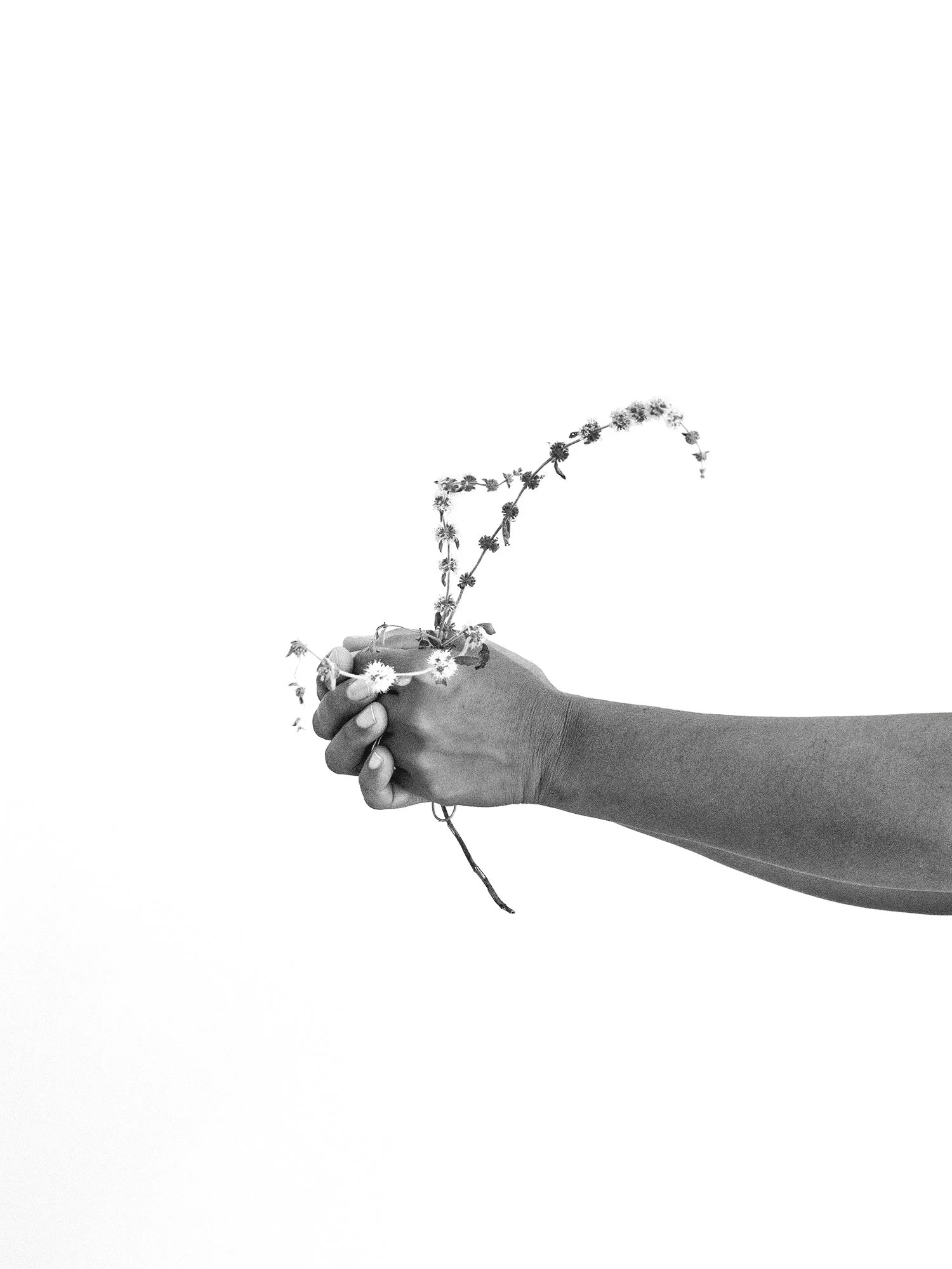
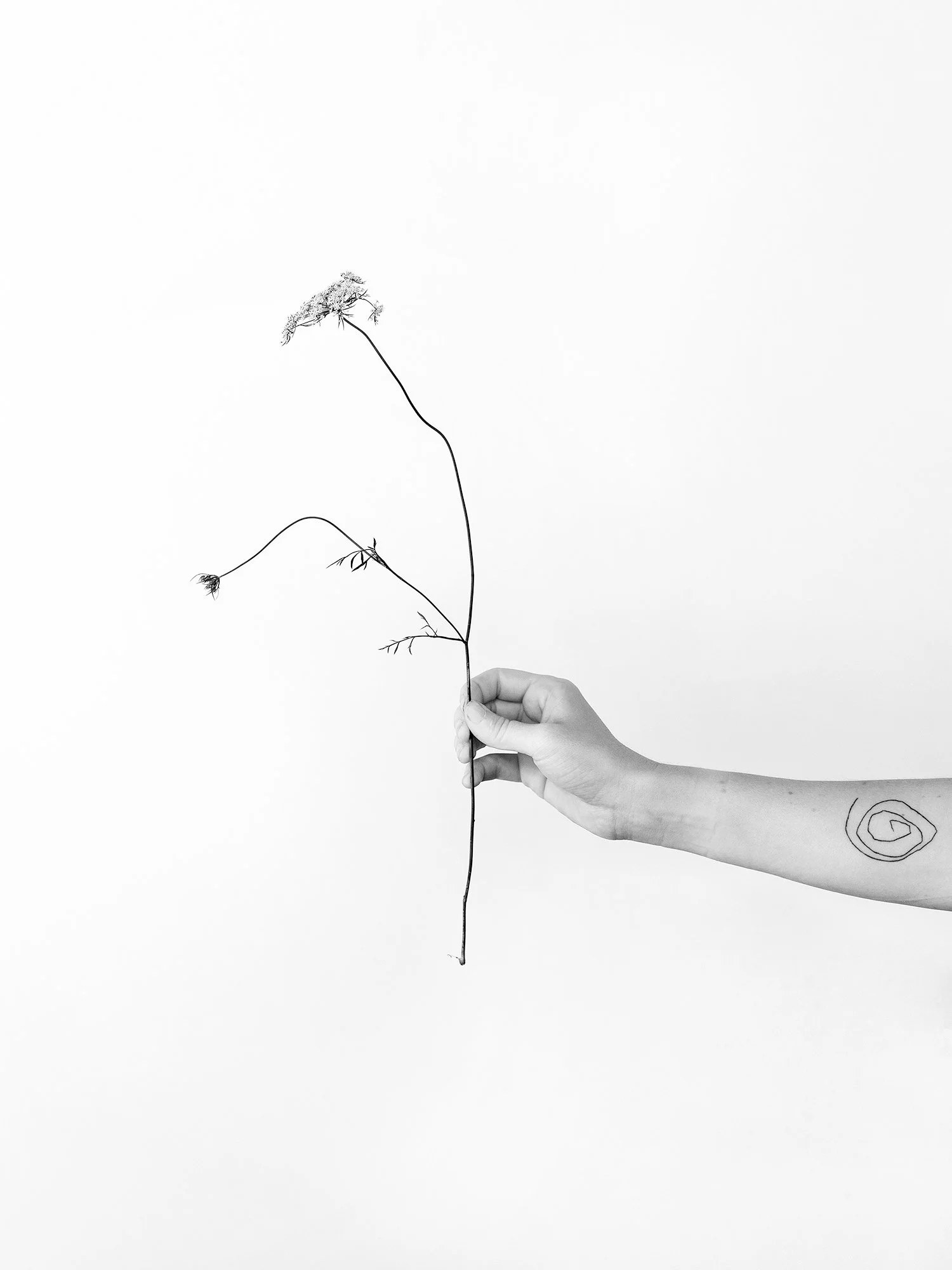
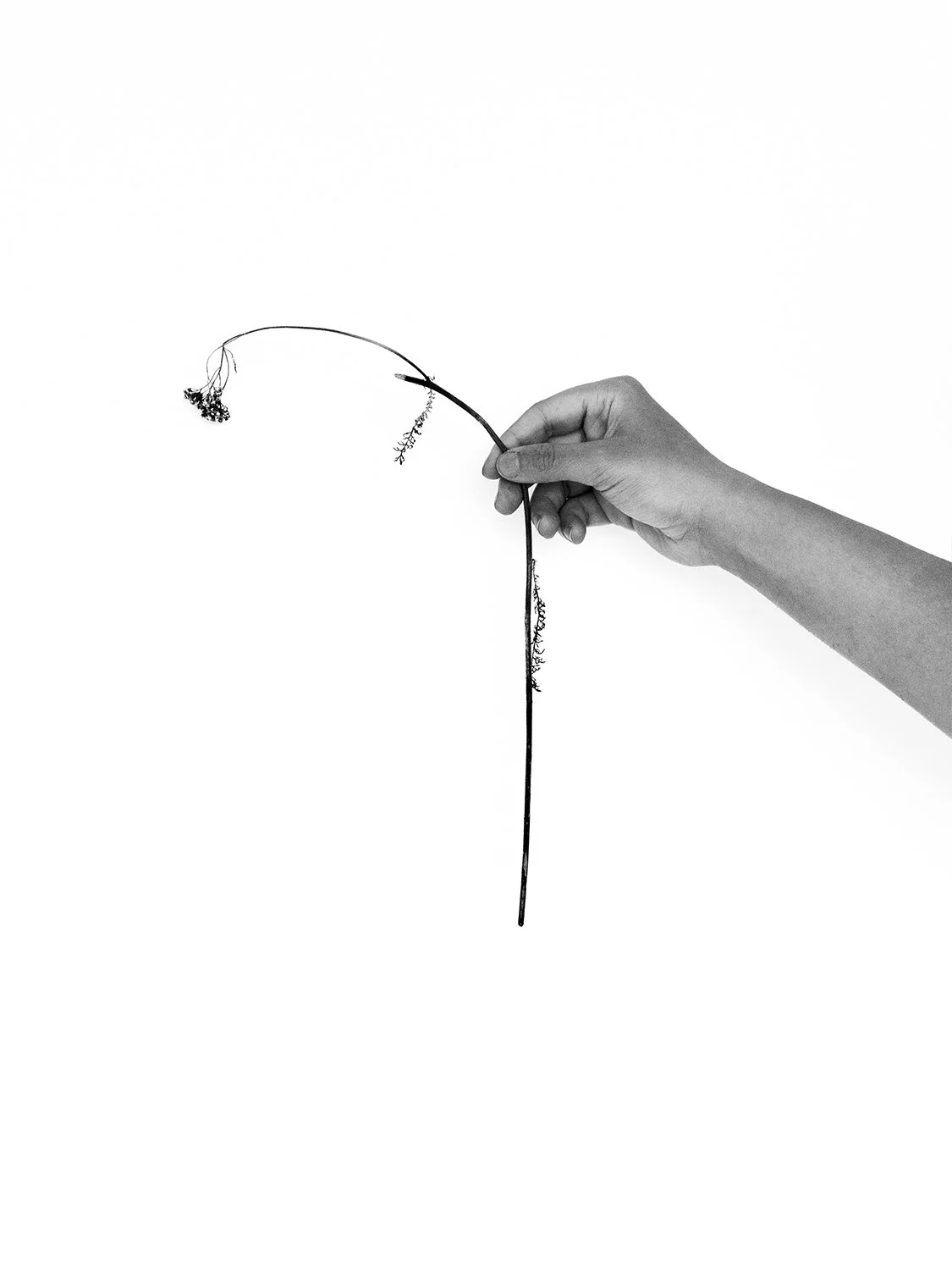
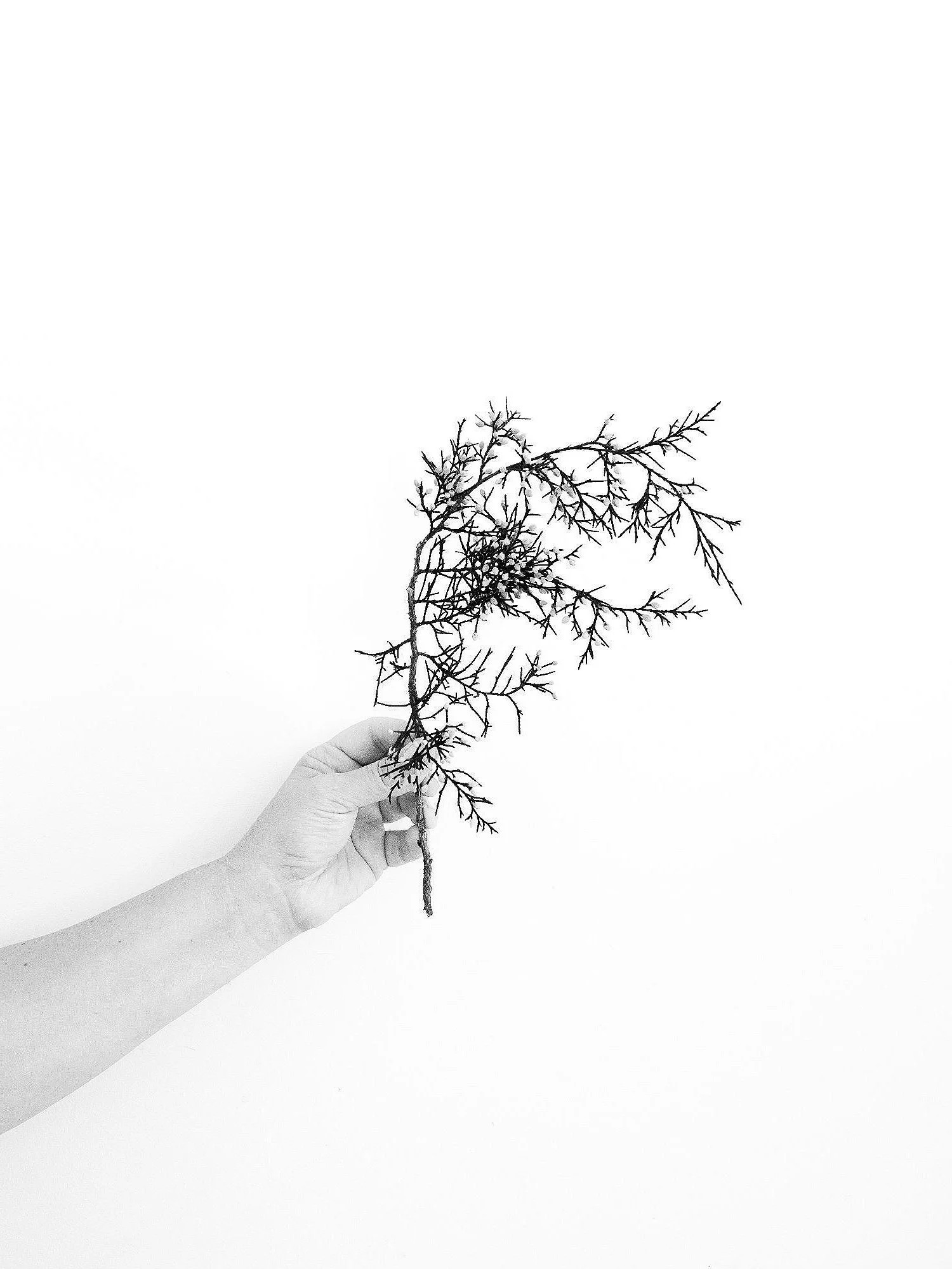
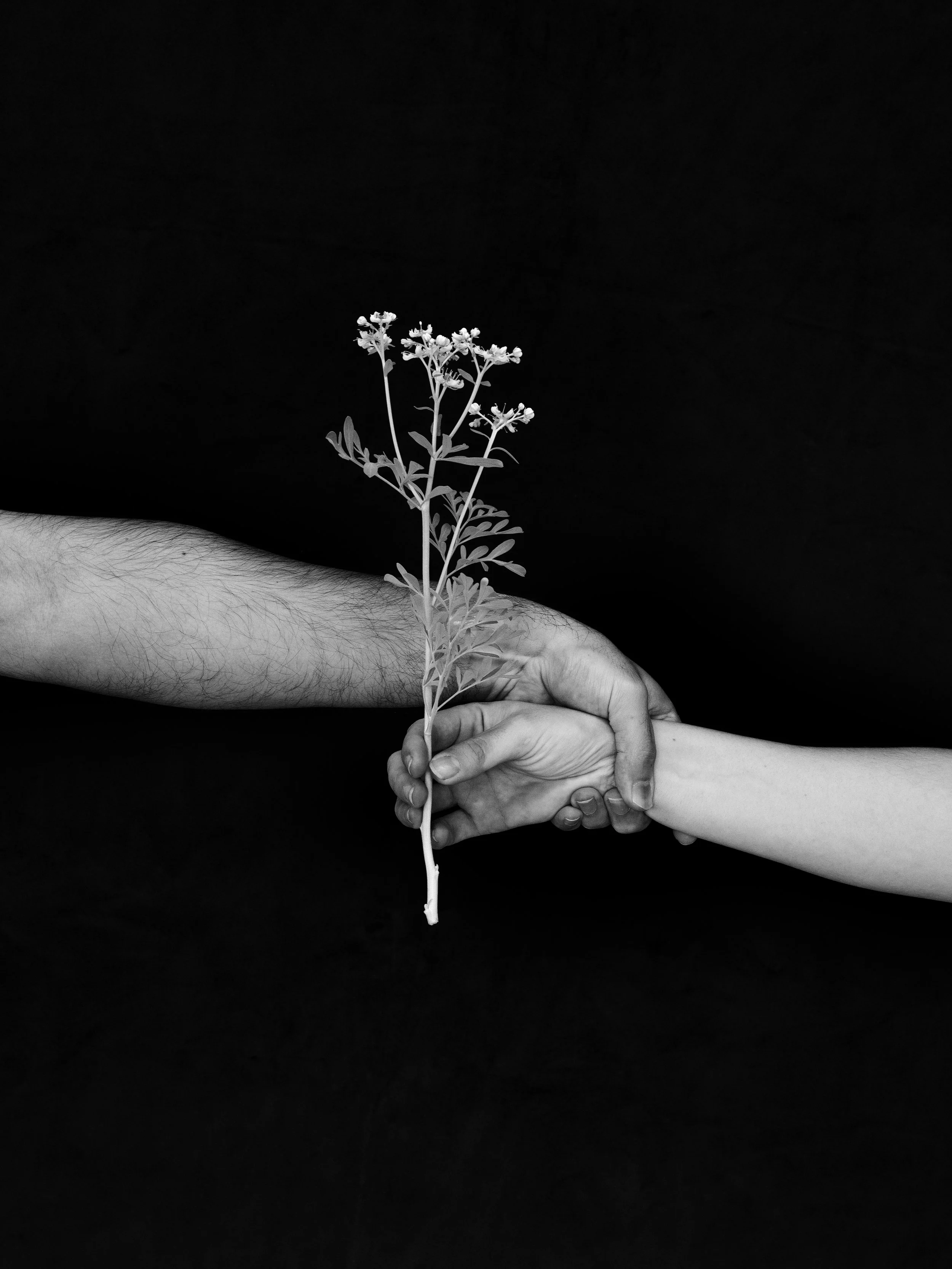
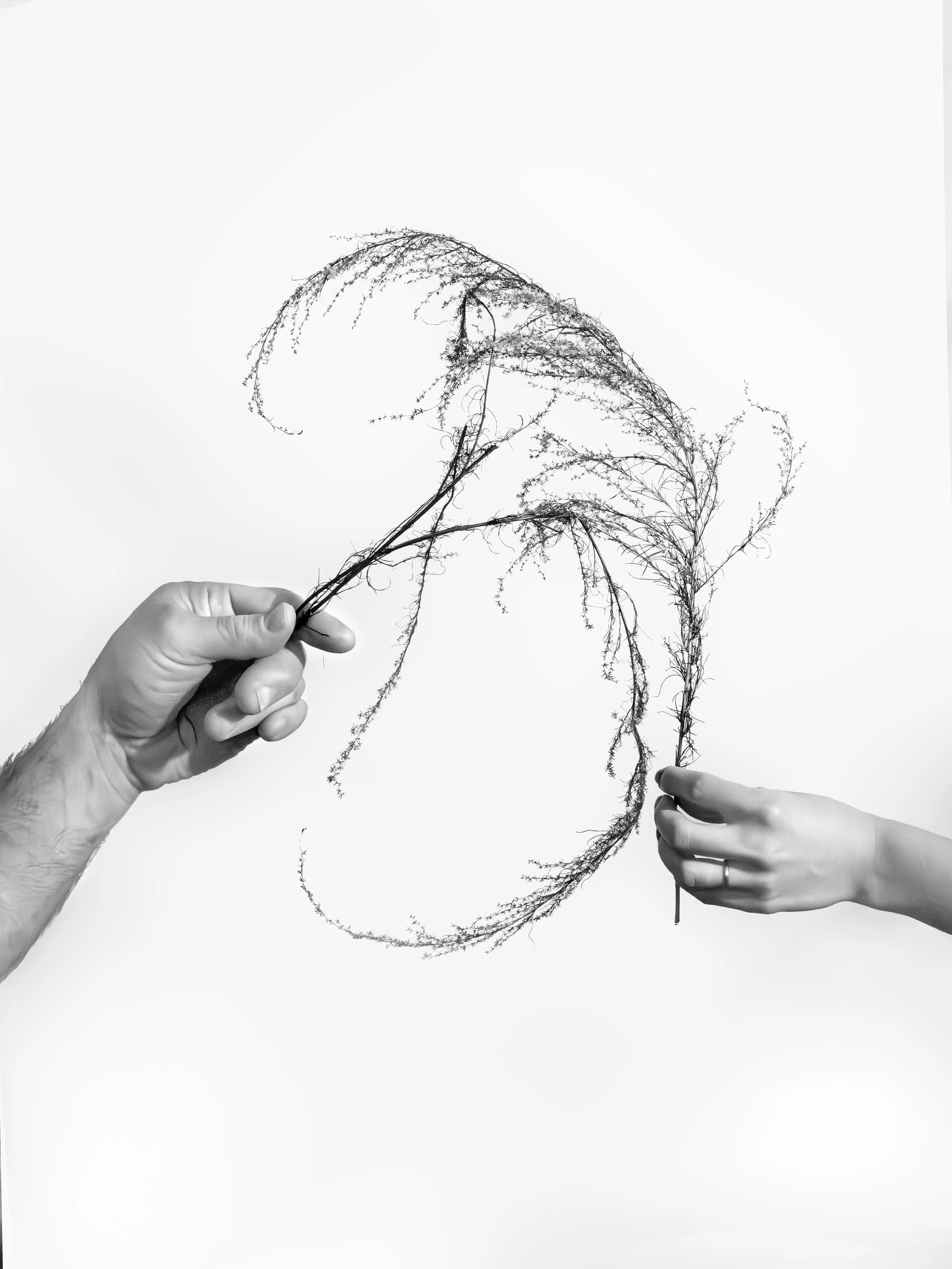
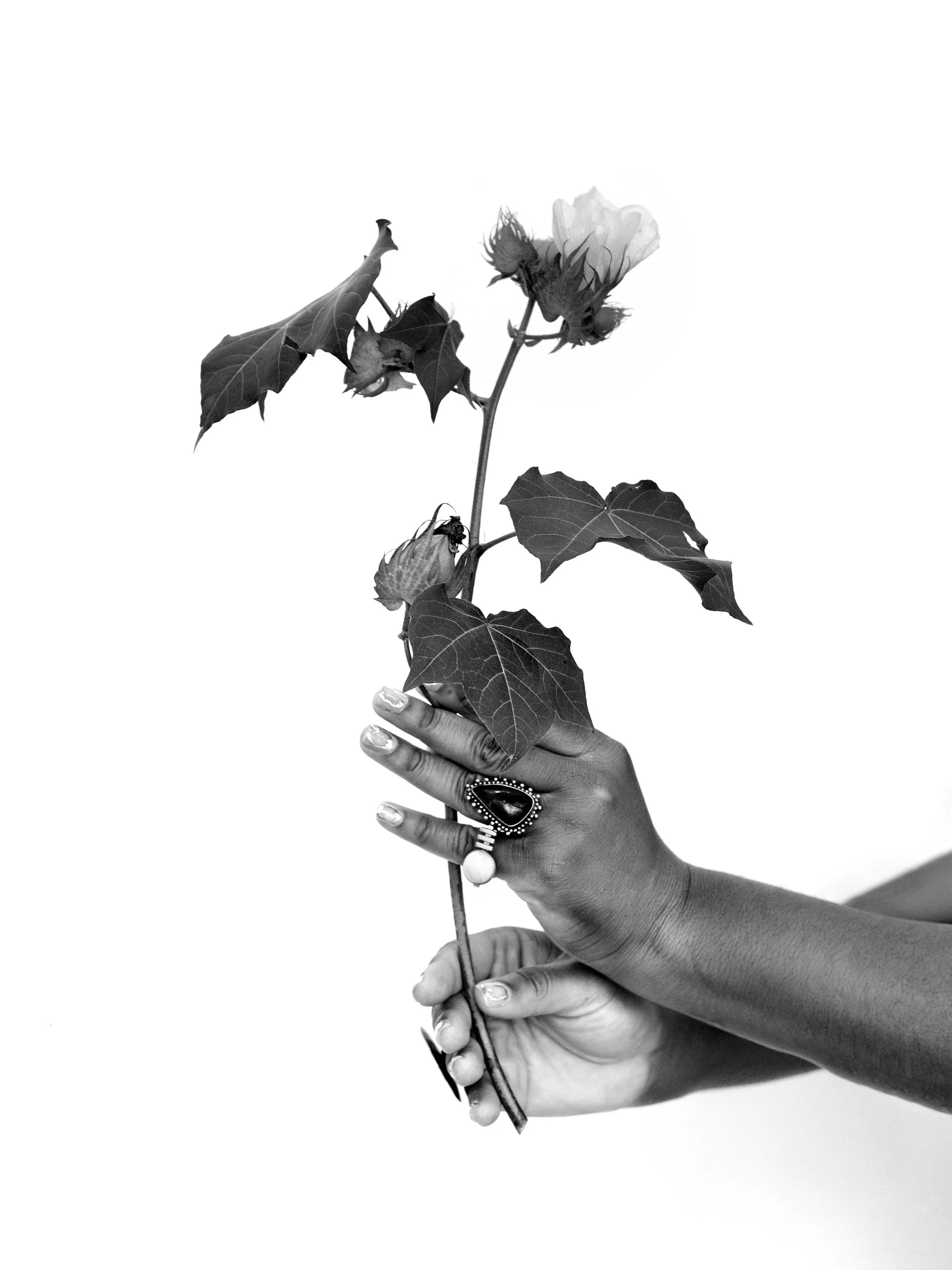
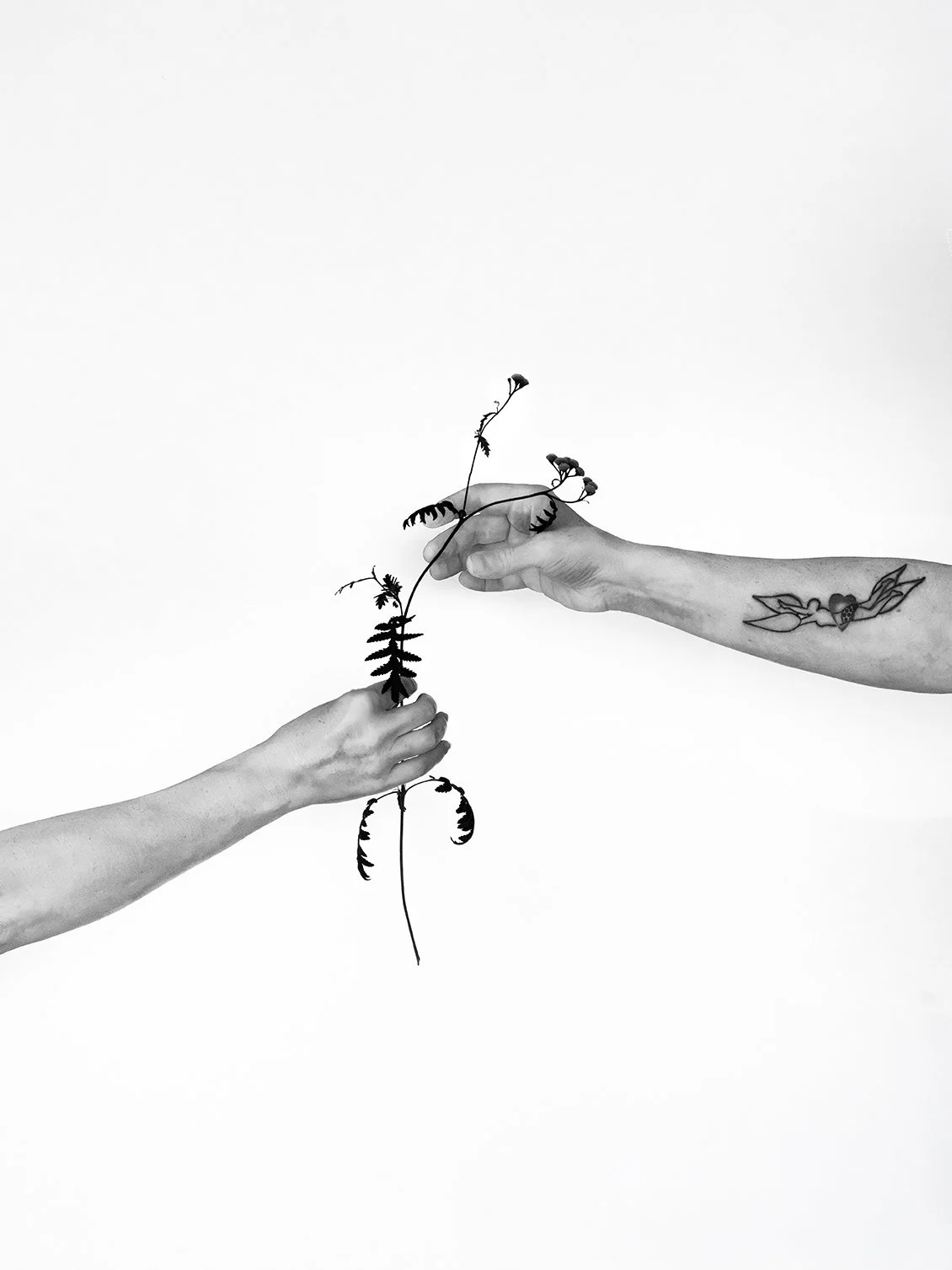
Holding Together is an ongoing collaborative project made in my home state of Alabama and other parts of the US with abortion bans. I photograph people holding botanicals used historically for contraception, abortion, or infertility treatment.
Since the 2022 fall of Roe, reproductive healthcare in the US has increasingly come under political control. I work collaboratively with others to consider histories of shared knowledge and community resistance that have supported reproductive freedom across time. My subjects and I recall forms of folk medicine, including some with toxic side effects, to honor a long and imperfect struggle for bodily autonomy. The plants we hold cannot adequately provide care, and we refuse to accept a world where they become our only resource. The project also acknowledges the often-unseen supporters who assist others in accessing reproductive services. In some images, partners, friends, parents, and health providers hold or offer plants in solidarity and shared support.




December 2022
Alabama
My OB called with results indicating that we were having a girl, and that there was an 87% chance that she had Down Syndrome. I said a silent prayer; please, please let them be wrong, let me keep her. An ultrasound a few weeks later seemed to confirm that the diagnosis was accurate. There was evidence of a heart defect. There was a mass on the abdomen that appeared to be some sort of lymphatic tumor. Prior to the Dobbs decision, this constellation of findings would have been considered “life-limiting” and would have made me eligible for a termination of pregnancy due to medical reasons. Post-Dobbs, none of these conditions on its own merited termination, but the combination of symptoms made it extremely unlikely that the fetus would survive to term. Even if she were to survive, the baby’s life would likely be short, painful, and punctuated by multiple corrective surgeries.
After a tearful phone call with my husband I filled out paperwork to have the pregnancy terminated. I wanted to pursue termination because that seemed kinder to the baby and to my mental health than continuing the pregnancy. The doctor explained that terminations of this kind had to be approved by various committees, all made up of partner doctors. Given the severity of the symptoms, she anticipated committee approval. Every day I had constant reminders of her presence as I felt her kick.
The doctor called a few days later to say that while my case had been approved by one committee, the higher level committee had denied permission to terminate. She formed her sentences very slowly and carefully, as if she was struggling to maintain dispassion. She told me that it was the hardest phone call she had made in her professional career. The committee felt that since each condition was by itself potentially survivable, that under Alabama law they did not think that my case met the criteria for termination. My doctor felt that the other committee members were acting out of fear of being prosecuted. The state’s District Attorney was actively attempting to prosecute doctors that performed “elective” abortions as felons. I sat in my car and sobbed because it felt like there was no light at the end of the tunnel. Whenever the baby would kick, I would tell her how much I loved her and wished I could be her mom.
I was counseled to seek a second opinion out of state. A hospital in Virgina took my case and scheduled termination for Jan. 31, but due to a scheduling mix-up my appointment slot was given to another patient and I was rescheduled for the next week. I was prescribed antibiotics, painkillers, and anti-anxiety medication for the termination appointment. I chose induction, and I elected to have the baby buried with other fetal remains free of charge by a Richmond funeral home. It was a difficult choice because now her body would be buried out of state, and not somewhere I could spontaneously visit.
I was 19 weeks, 5 days pregnant when my parents drove me to Richmond. My husband stayed behind with my daughter to try to maintain as much of a normal routine for her as possible. The next morning, a Virginia doctor gave me an injection to end the pregnancy. She told me that she firmly believed ending the pregnancy was the most loving thing we could do for our baby. She said the injection would take effect slowly and that I would likely still feel some movement from the baby for the rest of the day, but I never felt her again. When contractions started I got an epidural, and delivered my second child shortly before midnight. The nurses went through the same process of cleaning, weighing and measuring the baby as they would have with a live birth. They brought her to me to hold. I really appreciated that they treated me like a new mom, and her like a baby, not a corpse. My second daughter was born at 11:57 pm, 10 inches, 12.4 ounces.
I was discharged with mementos and grief resources, and my parents drove me home to Tuscaloosa and my family. My daughter was asleep when I got home, but I couldn¡¯t bring myself to look in on her for hours. I think it felt like a betrayal of the love and grief I had been feeling for the child I had just left behind.
The Richmond funeral home that took possession of our baby¡¯s remains holds a no-cost memorial service every 6 weeks for all the babies they receive who were miscarried, stillborn, terminated, or lived for fewer than 24 hours. There were about 75 other babies buried with our daughter. They wouldn¡¯t do a live stream of the service for me, but they mailed me a copy of the program and a plush toy they give to grieving mothers.


Veracruz, Mexico
2007
I wanted a little bit of money for candy. I was seven or eight years old. I went to one of my uncles, and that’s when he sexually assaulted me. I did not know what was going on. I did not know how to tell anybody, so I did not tell anybody. The only one I did tell was my childhood friend M.
M. was from a nearby town with no water or electricity in summer. During those times, her family would come to my town to see family members. When I told her that I was assaulted, she told me that she was attacked, too. She also said she’d had her first period, and she was excited that she could become a mother whenever she wanted. I hadn’t gotten mine. I was a very late bloomer, I didn’t get it until I was 15. So I didn’t realize that some of the symptoms she was telling me were not from a period, and in fact, were early signs of pregnancy. She told me that she was cramping up all the time and throwing up, and she didn’t know what to do. We realized that something was wrong, and later she told me, “I’ve not had the period again.” I think the blood was from implantation bleeding. She was around 11 or 12 at the time.
We lived in a very Catholic area and abortion was illegal at the time. We tried to find ways to help her have an abortion, which included eating a ton of sodium, crushing up papaya seeds to try to get the cyanide, to try to make up a tea, to try to see if that would kill the fetus. Nothing was working. Later on, her family found out and she went to have a backdoor abortion.
The only thing that the family would say after that was that she had an accident and bled out. They did not have a funeral for her. They did not want to bury her. I kept saying, it wasn’t her fault. Kids can’t get pregnant by themselves.
It wasn’t until I was 15 years old that I actually told people that it was my uncle. He had cancer at the time, and because they were so religious, my family said his cancer was his punishment and that we weren’t gonna do anything. So she passed away, lost and forgotten, for a crime she did not do. It’s something that I have carried, and wonder if I had told anybody sooner, if I would have been able to help her, maybe she wouldn’t have him, maybe she wouldn’t have been there. And it didn’t help that when he finally did pass away, when I was 16, half the women in that town went to go tell him that he was going to go to hell. Everybody from my godmother to several cousins and family friends, they were all his victims. He had half the women in that town abused and scared, and no one knew that they could talk to each other. No one knew that they were going through the exact same thing.
What makes it worse in my mind is that I told my mother, and my mom’s a really sweet person, but she’s very non-confrontational and would rather things lie down. He was already gonna die, and she didn’t see a point of kicking up the dirt and starting more family drama. I had to go apologize to him on his deathbed and tell him that I forgive him. I went, and the only thing I was thinking about was M. I looked at him and said, “I’m gonna forgive you, but not because of you. I’m gonna forgive you because I walked into this house. But I want you to know from this day forward, I think that you’re not a man. You’re not even a worm. I’ll forgive you for what you did, but in my mind, you’re not a rapist or a predator. You’re a murderer. You killed so many innocents.” Later on, when I finally told my godmother what happened, the only thing she told me was, I should have told sooner. To this day, we no longer speak his name.

Alabama
2026
I am training to be a midwife and I went out of state to do a clinical placement. I was placed with a Christian midwife who works almost exclusively with Amish families that travel to her from rural areas. I had a great two week stay with her and saw two breech babies born vaginally, which was awesome. The night before I came back to Alabama, we had a family come in. I think this was a fourth or fifth pregnancy, and she was around 20 weeks. Her water had broken. The midwife did an ultrasound and the fetus was alive, but it wasn’t developed enough to survive outside of the womb.
We had a long conversation with the couple about what might happen if they went to the hospital and what we could do for them if they didn’t. At the hospital, they may try to keep the pregnancy going long enough to get to viability at 24 weeks, but here’s what that actually means. If you make it to 24 weeks and then the baby is born, the outcomes at that gestational age aren’t good. We shared the survival rate for a baby that little. And then out of those few babies that do survive, the chances of them having major, major, major issues are very high, because they’re really just not ready to be in the outside world yet. Eventually, the dad said, “I don’t think that we would want this baby to suffer and I don’t want to risk my wife getting an infection.” That’s the big risk when the water has broken and it was the reason we were talking the situation through. He said, “I’m really struggling with the idea of murdering this baby. Is this an abortion?” The midwife and I looked at each other and I was like, “Well, this wouldn’t be doing anything to kill the baby, but we would be inducing labor knowing that when the baby is out, it will not live for long and may not survive the labor process.” They ended up opting for an induction abortion outside of the hospital.
Afterwards, the midwife asked if I was okay. I felt lucky. I was glad that I was there for this family. It was an honor to be able to support them without judgment or bias and to walk them through what made sense for them. Their baby was born alive. They got to spend time quietly afterwards and the midwife prayed over the baby after it came out. It was a little girl, and they did footprints and all of that. The parents were so glad we were able to do this. As soon as the baby was born and they saw her, they said they felt they’d made the right decision.
Experiences like this continue to affirm my belief in choice. There’s just not a whole lot of unbiased support out there for people in either direction. I couldn’t offer anybody in Alabama the choice to have this peaceful ending to their pregnancy and to honor their choices as a parent and have their baby’s life be honored in that way. She would go to the hospital and be kept. She would go septic before they could do anything.

Alabama
2026
My sister and I have a plan. We’ve talked about it more than once. I will go to her house in California and stay with her for a few days.